Newsflash: Holocaust Survivors Struggle to Survive in Israel
posted by Michelle-aneous Musings | 3:48 PM
|
0 comments

(SJC HY 101-M: Honors Western Civ. 2005-2006)
When Gandhi was asked what he thought of Western Civilization,
the Mahatma replied that he thought it would be...



posted by Michelle-aneous Musings | 3:48 PM
|
0 comments
posted by Michelle-aneous Musings | 4:44 AM
|
0 comments
What I realized as a part of this workshop was that a successful curriculum unit at any grade level cannot focus upon just one of these literacies as a goal in itself.
Lacking meaningful context, it just won't "stick" (either for the student or for the instructor...)
Thus, while one or another may be a main focus of the lesson, it must be supported by as many as is naturally possible to be as effective as possible! So, needless to say, "cyberliteracy" not fully integrated into the course material will be useless (and perhaps even a hindrance!)

Q: How to start, even if we weren't born "instant messaging"?
A: By utilizing (and often letting them teach us) what students already know like the back of their hands, technology!
In fact, at last count, apparently over 20 million teens are online and 57% of them - 12 million - are already creating content on the internet!
"Fifty-seven percent of teens online are 'content creators,' building Web pages for themselves and their friends or for a school assignment or an organization. One-third of these savvy tech heads share original content -- writing, artwork, photos, and videos -- on personal blogging Web sites such as LiveJournal and online social networks like MySpace. Eight million teens read blogs, while about half that many have created one."1
Talk about active learning!!
Blogs are perfect media both to start teaching for multiple literacies and to teach through them!
What are "blogs"?
At the beginning of 1999, only about 2 dozen "blogs" were known to exist.3
By April 2006:

Blogs are highly valuable both inside of the classroom and out, by fostering "cognitive apprenticeship"5 (which can go both ways!)
Indeed, "collaborative weblogs promote the idea of learners as creators of knowledge, not merely consumers of information."6

(More on percentages of material learned via "active learning"...)
WebCT does the same thing! But I find it works best for functions in a private (i.e., password-controlled) environment, like...
While there are several free blogging sites out there, from personal experience, I find the free site "Blogger" great for public functions, like collaborating with other faculty, or even global collaborations, like...
(Excellent also for encouraging among both students and instructors the ever-important "mental habit" of communicating course material online...)
Why?
In conclusion...
The Internet is "new and improved"! It's gone beyond being merely interactive to being collaborative, what experts are now calling "Web 2.0". (The most popular "Web 2.0" applications are listed here!)

It's unprecedented... and it can take our teaching to the next level! See you there!! :-)
Footnotes:
Selected Additional Resources:
UPDATED 5/3: Apparently even the Vatican's new website, currently in the works for a Fall release, will also be collaborative! :-)
UPDATED 6/2: Pew: Nearly 50 MM Americans Create Web Content
UPDATED 6/21:
posted by Michelle-aneous Musings | 2:18 PM
|
1 comments
posted by Michelle-aneous Musings | 6:21 AM
|
0 comments
Tuesday, May 2: Is there such a thing as a Cold War? (Discussion & Essay due!)
Reading Assignment:
Thursday, May 4: September 11th and the Post-Cold-War World
posted by Michelle-aneous Musings | 6:11 PM
|
0 comments
posted by Michelle-aneous Musings | 8:27 AM
|
0 comments
posted by Michelle-aneous Musings | 12:59 PM
|
0 comments
Thursday, April 6 - Countdown to the French Revolution
Tuesday, April 11- The French Revolution
READING ASSIGNMENT:
Tuesday, April 18: Napoleon and the Aftermath of the French Revolution
READING ASSIGNMENT:
Thursday, April 20: Field Trip to the Museum of Fine Arts in Boston
posted by Michelle-aneous Musings | 10:51 AM
|
0 comments
 (Burying the dead in the London epidemic of 1665-6)
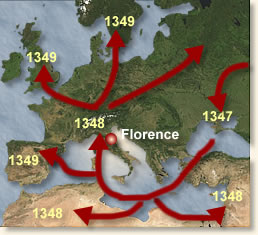 (Outbreak of the Black Death, 1347-1352)

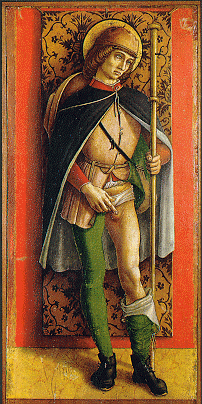

(17th Century Plague Doctor)
Additional Links for More Information:
posted by Michelle-aneous Musings | 5:35 PM
|
0 comments